Reno’s Evolving Housing Scene: Is a Buyer’s Market on the Horizon?
For years, Reno’s real estate arena has been a stubborn sellers’ market, leaving many potential homebuyers feeling sidelined. However, recent signs suggest that the market’s behavior might be shifting, hinting at a future that could be more inviting to buyers. In this opinion editorial, we take a closer look at the tangled issues and subtle details of Reno’s housing market, exploring its historical performance, the influence of mortgage rate hikes, the effects of remote work, and the intriguing changes unfolding in new construction.
As local experts have noted, discerning the real state of Reno’s housing market these days is somewhat like trying to look directly into the sun—overwhelming and filled with confusing bits. Yet, by examining the data and talking with seasoned real estate professionals, one can spot the slow transformation underway.
Understanding Reno’s Historical Home Price Trends
Before taking a closer look at the current market, it is essential to understand the background that has led Reno to where it is today. Post-Great Recession, Reno cemented its status as a sellers’ market, with home prices steadily climbing thanks in part to a strong rebound and an influx of new residents drawn by the promise of remote work and improved quality of life.
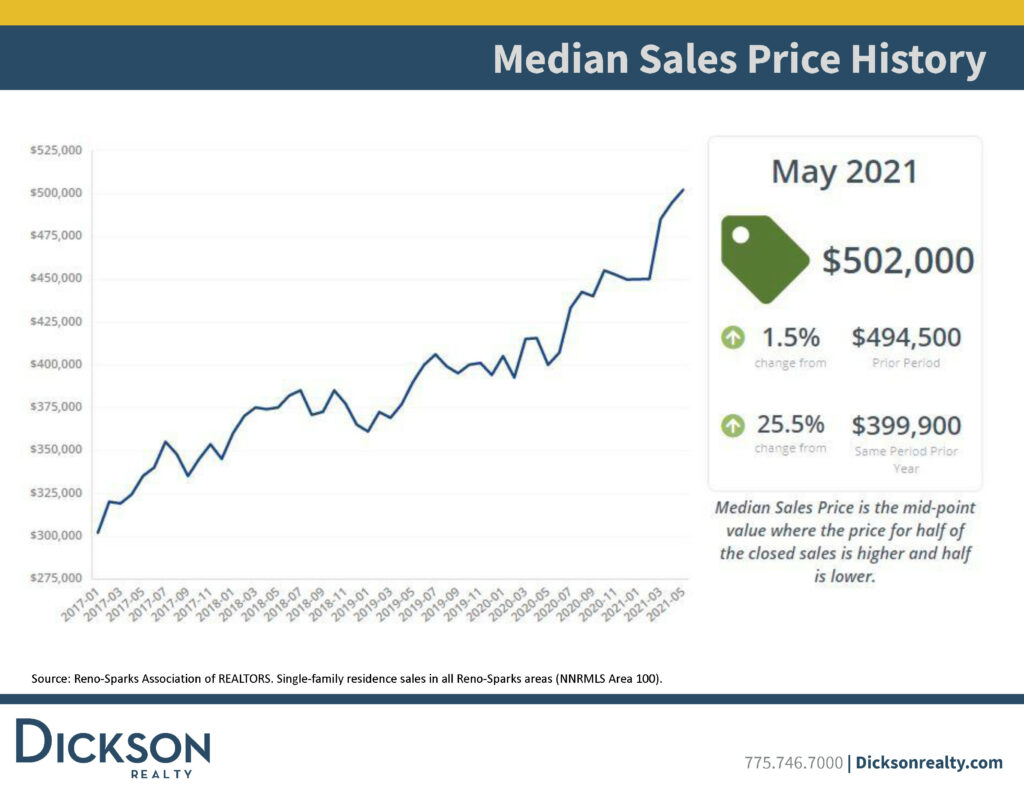
Veteran agent Gary MacDonald of Dickson Realty, for instance, once projected a “fairly steady market” with a modest 4% appreciation on existing homes—a prediction quickly upended by the sudden impact of COVID-19. In the wake of the pandemic, the bustling demand pushed Reno’s median home prices from a pre-COVID benchmark of $430,000 to a soaring $635,000 by the summer of 2022. Similarly, the nearby city of Sparks experienced a dramatic leap from $380,000 to $570,000.
This history of rapid price escalation, combined with sparse inventory, cemented Reno’s reputation as an intimidating market for those hoping to purchase a home. Despite this, the market’s current configuration suggests that vast changes may be on the way.
Reno Housing Market Trends 2025: Signs of a Buyer’s Market
Recent data indicates that after years of relentless growth in home prices, there are now subtle signs of market softening. While median prices have remained relatively high in 2025, experts point to similar trends seen in traditionally heated markets like parts of Arizona and Florida, which are now cooling off.
Reno’s combined median home price for existing single-family homes in the Reno-Sparks area has been oscillating near the $600,000 mark. Local data shows that while Reno’s median stands at about $630,000 and Sparks at $555,000, recent fluctuations suggest room for more competitive pricing, potentially offering relief to buyers as inventory begins to rise.
Key indicators that support this observation include:
- An increase in active inventory, which saw a notable 48.5% jump in May 2024.
- A contrasting decline in pending sales over the same period, down by 15.2% year over year.
- A slowdown in the overall volume of closed sales, hinting that while homes are listed at high values, fewer transactions are sealing the deal.
According to Ryan Elliott, COO at discount real estate firm Assist2Sell, these trends are not signaling an imminent crash but rather a balanced shift that might soon yield more options for homebuyers. As more properties linger on the market, the pressure for price reductions increases, thus making favorable conditions for buyers a real possibility.
Impact of High Mortgage Rates on Reno Homebuyers
Though the current conversation is about a potential tilt towards a buyer’s market, one must not overlook the persistent challenge of elevated mortgage rates. Rising from roughly 3% to levels upward of 6% over a short span, these rate hikes have had a significant impact on affordability.
Data collected in May 2025 reveals that the average mortgage payment in Reno-Sparks remains high at about $4,123—a figure that, despite a 5% drop from the previous year, is still nearly double the rate recorded at the start of the pandemic. This continued burden serves as a reminder that even as the market shows signs of cooling, the hefty monthly costs make it nerve-racking for many to dive in.
The interplay between high home prices and steep mortgage payments underscores the difficulty that prospective buyers face. Here are some of the key points to consider:
| Factor | Details |
|---|---|
| Median Home Price | Oscillating near $600,000 in the Reno-Sparks region |
| Mortgage Rates | Stabilizing between 6% and 7%, with no immediate drop forecast |
| Mortgage Payments | Average of $4,123, significantly higher than early pandemic levels |
| Affordability Index | An index score of 53, where ideally, it should be at least 100 |
While a small nudge downward in mortgage rates might encourage hesitant buyers to take the plunge, the combination of high payments and persistent market strength means buyers remain cautious. For many, the key challenge is finding a path through these tricky parts of the market, where both the excitement of potential gains and the anxiety of high monthly payments coexist.
Remote Work’s Role in Shaping the Market Dynamics
One of the critical forces that reshaped Reno’s real estate fortunes in recent years is the rise of remote work. As more professionals gained the ability to work from anywhere, Reno became a desirable destination for families and individuals seeking a more balanced lifestyle, affordable living, and a vibrant community.
The impact of this migration has been both wide-reaching and lasting. Reno’s appeal is not only rooted in its scenic landscapes and outdoor amenities but also in the work-from-home flexibility that enabled many to trade high cost-of-living areas for more affordable living arrangements—even if the initial surge of demand pushed up the median prices significantly.
Remote work continues to hold sway for several reasons:
- Increased Demand: More professionals are looking beyond traditional metropolitan areas, fueling a persistent demand for housing.
- Diverse Buyer Profiles: The influx of buyers includes young professionals, retirees, and families alike, each bringing different needs and price sensitivities.
- Impact on Inventory: While demand surges contribute to higher prices, they can also lead to an eventual increase in available homes as sellers seek to cash in on their investments.
The subtle detail here is that as the market adjusts from the remote work boom, the trick might be in balancing aggressive pricing with higher inventory levels. Sellers who understand these little twists may need to reassess their pricing strategies, particularly if the market continues to show signs of softening in certain segments.
New Construction: Navigating the Shifts in Reno’s Home Building Market
The story of Reno’s housing market isn’t complete without considering what’s happening in the new home construction segment. While the existing home sector has often stolen the limelight, new construction provides another layer of insight into the broader housing dynamics.
Historically, new home sales in Washoe County were robust. However, since 2023, construction activity has seen a notable slowdown. The average monthly sales of new homes have dropped from figures as high as 152 units in 2022 and 187 in 2021, to just above 100 units per month. This sharp decline carries lessons for both buyers and sellers alike.
The current state of new construction is characterized by a few key factors:
- Market Segmentation: The new home market today is much more varied, with a growing sub-sector for luxury homes catering to buyers with deeper pockets. This means that fluctuations in median pricing can be significant, depending largely on the types of properties sold in any given month.
- Price Per Square Foot Stability: Despite swings in the median price, experts note that the price per square foot for new homes has remained relatively stable. For instance, between 2023 and 2025, this metric hovered around $280, indicating that many of the price spikes are due more to the size and mix of homes sold than any intrinsic value change.
- Builder Incentives: Facing a slower market, new builders are increasingly offering incentives that might include reduced closing costs or other financial perks. For buyers, this could be a golden opportunity to secure modern construction with added savings.
Brian Bonnenfant, a project manager at the Center for Regional Studies at the University of Nevada, Reno, points out that while these market shifts might seem overwhelming at first glance, they are largely a product of the diverse range of properties available today. He remarks, “Some months, it’s good for Toll Brothers, some months, good for D.R. Horton,” emphasizing that the subtle parts of price variation stem from a diverse home inventory rather than actual value loss.
Strategies for Buyers in a Shifting Market
If you’re a prospective homebuyer trying to figure a path through this evolving landscape, the key is to stay informed and patient. Even though the market has been notorious for prompting sellers to call the shots, here are several practical strategies to consider:
1. Fully Research Local Trends: Stay up-to-date with local data and news. Monitoring changes—like increasing active inventory and shifting mortgage rates—will help you understand when the market may turn more favorable.
2. Work with Knowledgeable Agents: Engaging a seasoned real estate agent who has a pulse on Reno’s housing market can help you get around the tricky bits of pricing and negotiation. Agents like Gary MacDonald and professionals from Assist2Sell offer perspectives that are both grounded in data and enriched by local experience.
3. Be Ready for a Quick Decision: As the inventory expands, you may find more options available. However, in an environment where changes can be rapid, having your financing in order can be super important. That means getting pre-approved and being prepared to act swiftly when a property meets your needs.
4. Factor in Financing Costs: With mortgage payments still on the higher side and no clear sign of a quick rate drop, it’s critical to factor these costs into your home-buying strategy. Proper budgeting for monthly payments can save you from unpleasant surprises down the line.
5. Negotiate Thoughtfully: If you’re facing price reductions on a home that’s lingered on the market, use that to your advantage. A careful, well-researched negotiation—bolstered by an understanding of local trends and recent sales—can pave the way for a better deal.
In essence, while the market remains full of problems for buyers in some respects, being informed and prepared can help make the experience less nerve-racking. Many buyers, particularly those with cash reserves or a strong credit profile, might be in a unique position to step in as sellers begin to adjust their pricing strategies.
Considerations for Sellers in a Market on the Edge
On the flip side, for homeowners considering selling their properties, the shifting market demands a reassessment of strategy. While the overall environment is still robust—with sellers managing to secure high prices—experts warn that complacency could be costly. With rising inventory levels and subtle price pressures, sellers may need to make some adjustments to ensure a quick and effective sale.
Here are a few tips for sellers trying to make their way through these challenging times:
- Showcase Your Home’s Best Features: In a buyer’s market that is potentially emerging, presentation is critical. Sprucing up your home with a few upgrades or fresh landscaping can help it stand out, especially when buyers have more options.
- Set Realistic Pricing: Overpricing in a market where buyers are increasingly cautious could result in your property sitting on the market for too long. Working with a real estate professional to gauge local trends and price your home competitively is key.
- Monitor Market Data: Just as buyers are keeping an eye on inventory and pending sales, sellers should pay attention to local data. If trends indicate that the buyer’s market is gradually taking hold, adjusting your expectations sooner rather than later might be beneficial.
- Offer Incentives if Necessary: Much like new builders are extending incentives, sellers might consider offering perks, whether through covering some closing costs or offering flexible move-in dates, to attract serious buyers.
Ultimately, both buyers and sellers in Reno must cope with a set of complicated pieces that demand a balanced approach. With the market poised between high demand and growing inventory, it’s a time of considerable rethinking and subtle shifts in strategy.
Looking Ahead: What Does the Future Hold for Reno?
While many real estate professionals agree that the current trends do not signal an impending crash, they do indicate some movement toward a buyer-friendly scenario. Experts like Ryan Elliott and Gary MacDonald emphasize that the market is not about to collapse suddenly, but instead is in the midst of a slow transition.
Here’s what we might expect to see in the coming years:
- Steady Inventory Increase: As homebuyers take more time to decide, the gap between active listings and closed sales is expected to widen further. This can lead to more competitive pricing and a potential shift in market power.
- Incremental Price Adjustments: Sellers, being mindful of the new inventory trends, may opt for gradual price reductions. Over time, this could create opportunities for buyers who have long valued affordability.
- Refinement of Market Segments: Both the new construction and existing home segments will likely continue to evolve. In new construction, the difference between luxury and more moderately priced homes may become even more pronounced, while the existing market could see more stabilization in price per square foot.
- Mortgage Rate Movements: Although mortgage rates are currently hovering between 6% and 7%, even a small decrease could spur a wave of buyer activity. However, for now, buyers must plan for those high monthly payments.
In essence, the future of Reno’s housing market appears less like an abrupt upheaval and more like a measured shift. Those who take the time to closely monitor the subtle shifts and prepare accordingly will be best positioned to benefit from the change.
Conclusion: A Market in Transition
Reno’s housing market has long been celebrated for its rapid price escalations and strong seller dominance. Yet, as more data surfaces—highlighting increased inventory, persistent high mortgage rates, and evolving buyer profiles—it becomes clear that the market’s twists and turns are gradually tilting the scales in favor of buyers.
This transition is neither dramatic nor sudden, but it is unmistakably present. Buyers and sellers alike must be prepared to adapt as the market shifts. For buyers, this means being ready to act when opportunities arise and carefully budgeting for steep financing costs. For sellers, it entails presenting properties at their best, pricing realistically, and perhaps rethinking strategies as the balance shifts.
Ultimately, while the road ahead remains full of challenges, those willing to get into the details, understand the subtle differences in market trends, and make informed decisions will find that change is not something to fear, but rather a signal that opportunities may be emerging right under their noses. Whether you’re a buyer looking for a chance to step into a home at a more favorable price or a seller seeking to maximize value before the market adjusts further, staying informed, flexible, and strategic will be key in navigating Reno’s evolving real estate landscape.
In the end, Reno’s situation offers a lesson that extends far beyond local borders: real estate markets are rarely static. They are dynamic and subject to the ever-changing influences of economic factors, social trends like remote work, and the natural ebb and flow of supply and demand. By understanding these tricky parts and planning ahead, both buyers and sellers can find their way through the labyrinth of today’s housing market with confidence.
It’s an exciting time in Reno—a market historically dominated by sellers now shows signs of softening and openness. As negotiations continue and inventory grows, the narrative may well pivot in favor of those who have long watched from the sidelines, ready to finally take the plunge into homeownership. Change, as these experts agree, is coming, and it promises to reshape the landscape in ways that are both challenging and full of promise.
Originally Post From https://www.rgj.com/story/news/money/business/2025/07/03/is-reno-housing-finally-turning-into-a-buyers-market-real-estate/84439046007/
Read more about this topic at
Is Reno housing finally turning into a buyers’ market?
Reno set to reverse course on redevelopment incentive …